Introduction
Education technology is transforming how students learn, how teachers teach, and how schools manage educational experiences. In 2026, classrooms are becoming increasingly connected through artificial intelligence, digital learning platforms, interactive tools, cloud technology, and personalized education systems.
Technology is no longer limited to computers in a classroom. Students can access lessons, assignments, assessments, educational videos, collaboration tools, and AI-powered learning assistance from a wide range of devices.
At the same time, schools and educators must address important challenges, including privacy, cybersecurity, digital inequality, screen time, and responsible AI use.
This guide explores the most important education technology trends in 2026, their benefits, challenges, and how they may shape the future of learning.
Note: Technology features, education policies, and product capabilities can change quickly. Schools and educators should evaluate tools according to their current requirements, privacy policies, and applicable regulations.
What Is Education Technology?
Education technology, commonly called EdTech, refers to digital tools and technologies designed to support teaching, learning, assessment, communication, and educational administration.
Examples include:
- Learning management systems
- AI learning tools
- Digital classrooms
- Educational apps
- Interactive whiteboards
- Online courses
- Virtual classrooms
- Digital textbooks
- Cloud-based education platforms
- Student information systems
The goal is not simply to add more technology to classrooms. Effective EdTech should solve educational problems and improve learning outcomes.
1. Artificial Intelligence in Education
AI is one of the most significant education technology trends in 2026.
Artificial intelligence can support:
- Personalized learning
- AI tutoring
- Lesson planning
- Content creation
- Automated feedback
- Practice questions
- Language learning
- Student support
AI tools can potentially give students more individualized assistance while helping teachers reduce repetitive tasks.
2. AI-Powered Personalized Learning
Traditional classrooms often teach groups of students using the same materials and schedule.
AI-powered learning systems can potentially adjust educational content based on individual performance.
For example, if a student struggles with a particular mathematical concept, a digital system could recommend additional practice.
Students who demonstrate stronger understanding may move to more advanced material.
This creates the possibility of more flexible learning paths.
3. AI Tutors
AI tutors can provide conversational educational support.
Students can ask questions and receive explanations in natural language.
AI tutors may be useful for:
- Homework support
- Concept explanations
- Practice quizzes
- Language learning
- Exam preparation
- Programming practice
However, students should verify important information because AI systems can sometimes generate incorrect answers.
4. AI for Teachers
AI is also changing teacher workflows.
Educators can use AI to help generate:
- Lesson ideas
- Quiz questions
- Classroom activities
- Study guides
- Rubric drafts
- Learning examples
- Differentiated exercises
Teachers should review and customize AI-generated materials before giving them to students.
5. Digital Classrooms
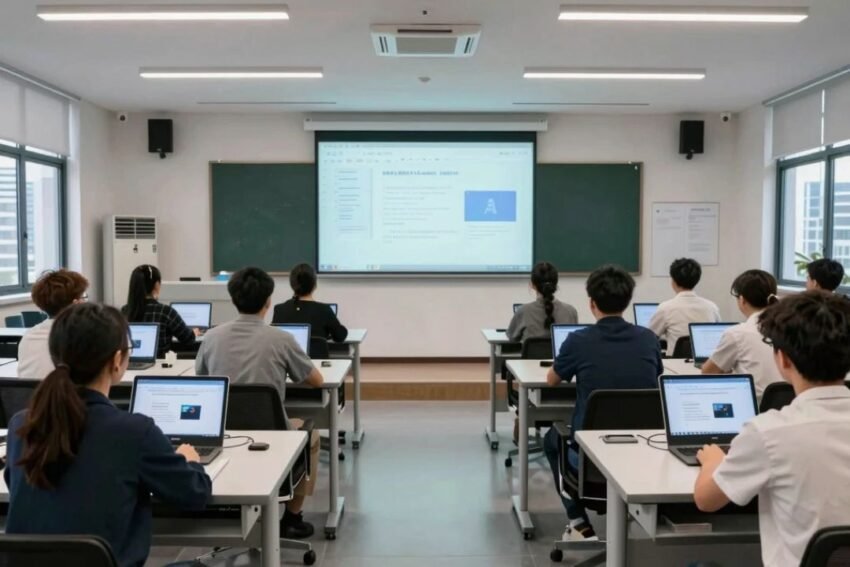
Digital classrooms combine traditional instruction with technology.
A modern classroom may include:
- Interactive displays
- Student devices
- Digital assignments
- Online collaboration
- Learning platforms
- Digital assessments
Technology can make it easier to distribute resources and collect student work.
6. Learning Management Systems
Learning management systems, or LMS platforms, provide centralized locations for educational materials.
Students may use an LMS to access:
- Lessons
- Assignments
- Grades
- Announcements
- Discussion boards
- Course calendars
Teachers can use these systems to organize coursework and communicate with students.
7. Cloud-Based Education
Cloud technology allows educational materials and applications to be accessed through internet-connected devices.
Cloud-based systems can support:
- File storage
- Collaboration
- Online assignments
- Digital classrooms
- School administration
- Remote learning
Students and teachers can work with shared documents without relying entirely on local storage.
8. Digital Collaboration Tools
Collaboration platforms allow students to work together even when they are not physically sitting in the same classroom.
Students can collaborate on:
- Presentations
- Research projects
- Documents
- Group assignments
- Brainstorming activities
These tools can also help students develop digital communication skills.
9. Interactive Learning Platforms
Interactive platforms make lessons more engaging through activities rather than passive reading.
They may include:
- Simulations
- Quizzes
- Games
- Interactive diagrams
- Virtual experiments
- Instant feedback
Interactive learning can be especially useful when students need repeated practice.
10. Gamification in Education
Gamification uses game-inspired elements in learning environments.
Examples include:
- Points
- Badges
- Levels
- Challenges
- Progress bars
- Leaderboards
The purpose is to encourage engagement and provide students with visible progress.
Gamification should support meaningful learning rather than simply adding competition.
11. Virtual Reality in Education
Virtual reality can create immersive educational experiences.
Students may be able to explore:
- Historical locations
- Scientific environments
- 3D models
- Virtual laboratories
- Engineering concepts
- Geographic locations
VR can be particularly useful for experiences that are difficult or expensive to recreate in a traditional classroom.
12. Augmented Reality Learning
Augmented reality overlays digital information onto the physical environment.
For example, students using a compatible device could view additional information about a physical object.
Potential applications include:
- Anatomy
- Engineering
- Geography
- Biology
- Art
- Technical training
AR can make abstract information more visual and interactive.
13. Digital Textbooks
Digital textbooks are becoming an important alternative to traditional printed materials.
They can include:
- Videos
- Interactive diagrams
- Search functions
- Embedded quizzes
- Digital annotations
- Links to additional resources
Digital formats can also make updating educational material easier.
14. Mobile Learning
Smartphones and tablets allow students to access educational content almost anywhere.
Mobile learning can support:
- Vocabulary practice
- Flashcards
- Online courses
- Video lessons
- Educational apps
- Quick revision
However, schools should balance mobile access with distraction management.
15. Microlearning
Microlearning delivers information in small, focused sections.
Instead of completing a long lesson, students may study one concept in a short session.
Microlearning can be useful for:
- Vocabulary
- Definitions
- Quick revision
- Professional training
- Skill development
It works especially well when learners have limited time.
16. Adaptive Learning Technology
Adaptive learning systems adjust educational activities according to student performance.
A student may receive easier or more challenging questions based on previous responses.
This can help identify knowledge gaps and provide targeted practice.
17. Automated Assessment
Technology can automate certain types of assessments.
Examples include:
- Multiple-choice quizzes
- Online tests
- Vocabulary exercises
- Basic programming challenges
Automated assessment can provide immediate feedback.
However, complex assignments may still require human evaluation.
18. Learning Analytics
Learning analytics uses educational data to identify patterns in student behavior and performance.
Schools may use analytics to understand:
- Assignment completion
- Course participation
- Assessment performance
- Learning progress
- Areas of difficulty
Data should be handled responsibly and with appropriate privacy protections.
19. Education Data Privacy
As more educational activity moves online, student privacy becomes increasingly important.
Schools and technology providers should consider:
- What student data is collected
- Why it is collected
- Where it is stored
- Who can access it
- How long it is retained
- How it is protected
Students and parents should understand how educational platforms handle personal information.
20. Cybersecurity in Education
Schools are increasingly dependent on digital systems, making cybersecurity an important EdTech issue.
Educational institutions need protection against:
- Phishing
- Malware
- Ransomware
- Account theft
- Data breaches
- Unauthorized access
Cybersecurity education should also be part of digital literacy.
21. Digital Accessibility
Education technology should be designed so that students with different needs can use it effectively.
Accessibility features can include:
- Screen readers
- Captions
- Text-to-speech
- Speech-to-text
- Adjustable text
- Keyboard navigation
- Translation features
Accessible design can help more students participate in digital learning.
22. Online and Hybrid Learning
Online and hybrid learning remain important components of modern education.
Hybrid learning combines physical classroom instruction with digital resources.
For example, students may attend classes in person while completing:
- Online assignments
- Digital quizzes
- Video lessons
- Virtual discussions
This provides additional flexibility.
23. Digital Skills Education
Technology itself is becoming an important subject.
Students increasingly need digital skills such as:
- Online research
- Cybersecurity awareness
- Data literacy
- AI literacy
- Digital communication
- Basic programming
- Media literacy
These skills can prepare students for modern workplaces.
24. AI Literacy
As AI becomes more common, students need to understand how to use it responsibly.
AI literacy includes learning:
- What AI can and cannot do
- How to write effective prompts
- How to verify AI-generated information
- How to identify potential bias
- How to protect personal data
- When AI use is appropriate
AI literacy may become as important as other forms of digital literacy.
25. Robotics in Education
Robotics can introduce students to engineering, programming, mathematics, and problem-solving.
Students can build and program robots while learning concepts through practical activities.
Robotics education can encourage:
- Creativity
- Collaboration
- Logical thinking
- Engineering skills
- Programming
26. Coding Education
Programming is becoming increasingly accessible through educational platforms.
Students can learn:
- Python
- JavaScript
- Web development
- Game development
- Robotics programming
- Data analysis
Coding platforms often use interactive exercises to make programming more approachable.
27. Virtual Laboratories
Virtual laboratories allow students to perform simulations that may be difficult to conduct physically.
They can be useful for:
- Chemistry
- Physics
- Biology
- Engineering
Virtual labs can supplement traditional experiments rather than necessarily replacing them.
28. Personalized Career Learning
EdTech platforms can help students explore career paths and identify relevant skills.
Students can connect:
Career goal → required skills → courses → projects → portfolio
This approach can make education more directly connected to employment opportunities.
29. Skills-Based Learning
Employers often need specific skills rather than simply academic credentials.
Education platforms increasingly emphasize:
- Practical projects
- Professional certificates
- Technical skills
- Portfolio development
- Job-focused training
Skills-based learning can complement traditional degree programs.
30. Digital Credentials
Digital certificates and credentials can provide evidence of completed training.
Some programs allow learners to share credentials electronically.
The value of a credential depends on:
- Issuing organization
- Subject
- Employer recognition
- Skill relevance
- Program quality
Students should research credentials before paying for them.
Benefits of Education Technology
Education technology can provide several advantages.
Greater Flexibility
Students can access learning materials outside traditional classroom hours.
Personalized Learning
Digital systems can potentially adapt learning to individual needs.
Faster Feedback
Automated systems can provide immediate responses to certain activities.
Better Collaboration
Students can work together using digital tools.
Wider Access
Online resources can connect learners with educational content from around the world.
Teacher Productivity
Technology can reduce some repetitive administrative tasks.
Challenges of Education Technology
Technology also creates challenges.
Digital Divide
Not every student has equal access to:
- Reliable internet
- Computers
- Tablets
- Modern software
Screen Time
Excessive screen use may reduce opportunities for physical activity and face-to-face interaction.
Privacy
Educational data requires careful protection.
Cybersecurity
Schools can become targets for cyberattacks.
Teacher Training
Educators need training to use new tools effectively.
Technology Costs
Hardware, software, maintenance, and training can require significant investment.
How Teachers Can Use EdTech Effectively
Technology should serve a clear educational purpose.
Before introducing a tool, teachers should ask:
- Does it improve understanding?
- Is it accessible?
- Is it easy to use?
- Does it protect student data?
- Does it support the curriculum?
- Does it provide meaningful learning value?
The newest technology isn’t automatically the best technology.
How Students Can Benefit From EdTech
Students can use technology to:
- Review lessons
- Practice difficult topics
- Organize assignments
- Collaborate with classmates
- Learn new skills
- Prepare for exams
- Explore careers
The key is to remain an active learner.
Future of Education Technology
The future of EdTech is likely to combine several technologies rather than rely on one major innovation.
AI, cloud computing, immersive learning, mobile devices, analytics, and digital collaboration can work together to create more flexible learning environments.
Schools may increasingly focus on personalized learning paths while maintaining human-centered teaching.
Education Technology Checklist
- Evaluate the educational purpose of each tool
- Protect student privacy
- Use secure passwords
- Teach cybersecurity awareness
- Develop AI literacy
- Provide accessible learning materials
- Train teachers
- Avoid unnecessary technology
- Balance screen and offline activities
- Encourage critical thinking
- Evaluate learning outcomes
- Keep digital resources updated
Frequently Asked Questions
What is the biggest EdTech trend in 2026?
AI is one of the most significant trends, particularly in personalized learning, tutoring, content creation, and educational support.
How is AI changing education?
AI can help personalize learning, provide tutoring, generate educational materials, automate certain tasks, and provide feedback.
Is technology replacing teachers?
Technology can automate some tasks, but teachers continue to provide human guidance, mentorship, judgment, and classroom interaction.
What is a digital classroom?
A digital classroom uses technology such as learning platforms, interactive displays, student devices, digital assignments, and online resources to support instruction.
Is online learning part of EdTech?
Yes. Online courses, virtual classrooms, learning platforms, and digital educational resources are major parts of education technology.
Why is cybersecurity important in education?
Schools store sensitive information and increasingly depend on digital systems. Cybersecurity helps protect accounts, systems, and educational data.
What is adaptive learning?
Adaptive learning uses technology to adjust educational content or difficulty based on a student’s performance and progress.
Will virtual reality become common in schools?
VR may expand in areas where immersive simulations provide clear educational benefits, although cost, accessibility, training, and hardware requirements can affect adoption.
Conclusion
Education technology trends in 2026 show that digital tools are becoming deeply integrated into modern learning. Artificial intelligence, personalized learning, digital classrooms, cloud platforms, virtual reality, adaptive systems, learning analytics, and digital collaboration are creating new possibilities for students and teachers.
However, technology should not be adopted simply because it is new. The most valuable EdTech solutions are those that improve learning, increase accessibility, support educators, protect student data, and provide measurable educational value.
The future of learning will likely be a combination of human teaching and intelligent technology. Teachers will continue to provide guidance and mentorship, while digital tools can offer personalized practice, flexible access, and new ways to explore information.
As education continues to evolve, students who develop strong digital skills, AI literacy, cybersecurity awareness, and critical-thinking abilities will be better prepared for an increasingly technology-driven world.