Introduction
Technology is becoming a bigger part of everyday life. From artificial intelligence and smart devices to cloud computing, 5G, automation, and cybersecurity, digital innovation is changing how people work, communicate, shop, learn, travel, and entertain themselves.
The top technology trends in 2026 are not limited to futuristic ideas. Many are already being used by consumers and businesses, while others are developing rapidly and could have a major impact in the coming years.
Understanding these trends can help individuals, businesses, students, and technology enthusiasts prepare for a rapidly changing digital world.
1. Artificial Intelligence
Artificial intelligence continues to be one of the most influential technology trends in 2026.
AI is being used for:
- Content creation
- Data analysis
- Software development
- Customer support
- Research
- Productivity
- Business automation
- Personalized digital experiences
The biggest change is that AI is moving beyond standalone tools and becoming integrated into everyday software and services.
2. Generative AI
Generative AI can create content such as text, images, audio, video, and software code.
Businesses can use it for:
- Marketing
- Research
- Documentation
- Customer service
- Brainstorming
- Software development
However, AI-generated content should be reviewed for accuracy, originality, privacy, and potential copyright issues.
3. AI Agents
AI agents are designed to help complete multi-step tasks rather than simply answer individual questions.
Potential applications include:
- Research
- Scheduling
- Data processing
- Customer support
- Business workflows
- Task management
Human supervision remains important, especially when AI systems are used for important business or personal decisions.
4. AI-Powered Software Development
AI is changing how developers create applications.
Coding assistants can help with:
- Code generation
- Debugging
- Testing
- Documentation
- Code explanation
- Refactoring
Developers still need to review AI-generated code for security, accuracy, and performance.
5. Cloud Computing
Cloud computing remains a core part of modern technology.
Businesses use cloud platforms for:
- Storage
- Databases
- Software
- Analytics
- AI workloads
- Collaboration
Cloud services allow organizations to scale computing resources according to their needs.
6. Edge Computing
Edge computing processes data closer to where it is generated.
It can be useful for:
- Smart factories
- Robotics
- Connected vehicles
- IoT systems
- Real-time applications
Processing information closer to devices can reduce latency for suitable workloads.
7. 5G Connectivity
5G networks are helping create faster and more connected digital experiences.
Potential applications include:
- Smart cities
- Connected vehicles
- IoT
- Industrial systems
- Mobile services
- Remote applications
Actual performance varies depending on location, network provider, device, and other conditions.
8. Private 5G
Private 5G networks are designed for specific organizations or locations.
They can support:
- Manufacturing
- Warehouses
- Ports
- Healthcare facilities
- Industrial operations
Private networks can give organizations greater control over connected devices and network performance.
9. Internet of Things
The Internet of Things connects physical objects to digital networks.
IoT devices can include:
- Smart appliances
- Sensors
- Security systems
- Industrial equipment
- Wearables
- Connected vehicles
IoT can improve automation and monitoring, but connected devices also need strong security.
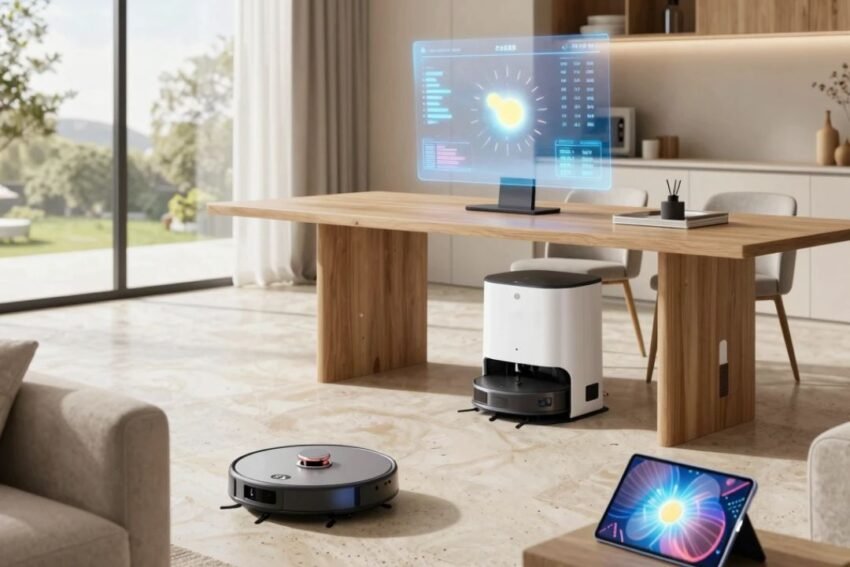
10. Smart Homes
Smart-home technology is becoming increasingly integrated.
Users can connect:
- Lights
- Thermostats
- Cameras
- Locks
- Appliances
- Entertainment systems
Smart homes can provide convenience and automation, but consumers should pay attention to privacy and device security.
11. Wearable Technology
Wearables continue to evolve beyond traditional fitness trackers.
Examples include:
- Smartwatches
- Smart rings
- Fitness trackers
- Specialized sensors
Depending on the product, these devices can monitor activity and other health-related measurements.
Consumers should understand the limitations of wearable measurements and avoid treating consumer devices as automatic medical diagnoses.
12. Robotics
Robotics is becoming increasingly capable due to improvements in AI, sensors, software, and hardware.
Robots are being used in:
- Manufacturing
- Warehousing
- Logistics
- Agriculture
- Inspection
- Research
The combination of robotics and AI could expand the range of tasks machines can perform.
13. Humanoid Robots
Humanoid robots are attracting increasing interest because their form is designed for environments built for people.
Potential uses include:
- Industrial tasks
- Warehousing
- Research
- Training
- Specialized assistance
Large-scale adoption will depend on reliability, safety, cost, and practical usefulness.
14. Automation
Automation is transforming repetitive business processes.
Companies can automate:
- Data entry
- Scheduling
- Reporting
- Document processing
- Inventory tasks
- Customer-service workflows
The goal is often to allow employees to focus on tasks requiring judgment, creativity, and communication.
15. Electric Vehicles
Electric vehicles remain an important area of technology development.
Innovation is taking place in:
- Battery technology
- Charging
- Vehicle software
- Energy management
- Driver-assistance systems
The benefits of an EV depend on factors such as driving habits, vehicle type, charging access, and local infrastructure.
16. Advanced Batteries
Battery technology is critical for:
- Electric vehicles
- Smartphones
- Laptops
- Renewable energy storage
- Portable electronics
Developers continue working to improve energy density, charging speed, durability, cost, and safety.
17. Smart Charging
Smart charging can help manage electricity consumption.
It may allow systems to:
- Schedule charging
- Manage energy demand
- Optimize electricity use
- Coordinate with energy systems
This could become increasingly important as electric transportation and renewable energy expand.
18. Cybersecurity
Cybersecurity is becoming more important as digital services and connected devices grow.
Common threats include:
- Phishing
- Malware
- Ransomware
- Credential theft
- Social engineering
- Data breaches
Consumers and organizations should use layered security practices.
19. Zero Trust Security
Zero Trust security focuses on verifying users and devices rather than automatically trusting them.
It can involve:
- Identity verification
- Access controls
- Device authentication
- Least-privilege permissions
- Continuous monitoring
Zero Trust is particularly useful for cloud-based and remote-work environments.
20. Passkeys
Passkeys provide an alternative to traditional passwords on supported platforms.
They can help reduce risks related to:
- Password reuse
- Phishing
- Weak passwords
- Credential theft
Users should still protect their devices and recovery methods.
21. Quantum Computing
Quantum computing remains an emerging technology with potential applications in specialized areas.
Potential fields include:
- Scientific research
- Optimization
- Materials science
- Cryptography research
- Complex simulations
Quantum computers are not general replacements for conventional computers.
22. Digital Twins
Digital twins are digital representations of physical systems.
They can help organizations:
- Monitor equipment
- Simulate scenarios
- Analyze performance
- Improve maintenance
- Test changes
Applications include manufacturing, energy, transportation, and infrastructure.
23. Extended Reality
Extended reality includes virtual, augmented, and mixed reality.
Applications include:
- Gaming
- Training
- Education
- Design
- Entertainment
- Collaboration
Better hardware and software could make immersive technology more useful across industries.
24. Spatial Computing
Spatial computing allows digital information to interact with physical environments.
Potential applications include:
- Product design
- Training
- Visualization
- Education
- Entertainment
- Remote collaboration
It could change how people interact with digital content beyond traditional screens.
25. Digital Health
Technology is changing healthcare through:
- Telehealth
- Remote monitoring
- Digital appointments
- Health applications
- Connected devices
The usefulness of these technologies varies according to the service, healthcare system, and individual circumstances.
26. AI in Healthcare
AI is increasingly being explored for healthcare research and administrative tasks.
Potential applications include:
- Medical image analysis
- Research
- Drug discovery
- Documentation
- Data analysis
Healthcare AI requires careful validation, privacy protections, and professional oversight.
27. Education Technology
Digital technology is transforming education.
Students can access:
- Online courses
- Digital textbooks
- AI learning tools
- Interactive simulations
- Collaboration platforms
Technology can expand access to information while teachers continue to provide guidance and context.
28. Smart Agriculture
Agriculture is becoming more technology-driven.
Farmers can use:
- Sensors
- Drones
- GPS
- AI
- Automated equipment
- Data analytics
These technologies can help monitor crops, resources, and field conditions.
29. Smart Manufacturing
Smart factories combine connected equipment, software, automation, and analytics.
Technologies can include:
- Industrial robots
- IoT sensors
- AI systems
- Digital twins
- Automated inspection
Smart manufacturing can improve monitoring and operational efficiency.
30. Blockchain Technology
Blockchain remains an emerging technology with applications beyond digital assets.
Potential uses include:
- Supply-chain tracking
- Digital identity
- Financial infrastructure
- Digital ownership
- Decentralized applications
The value of blockchain depends on whether decentralization provides a practical advantage for a specific use case.
31. Digital Payments
Digital payment technology continues to expand.
Examples include:
- Mobile wallets
- Contactless payments
- Online payment platforms
- Digital banking
Users should protect financial accounts with strong authentication and monitor transactions.
32. Sustainable Technology
Sustainability is becoming an important consideration in technology development.
Innovation is occurring in:
- Renewable energy
- Energy storage
- Efficient computing
- Recycling
- Sustainable manufacturing
- Smart energy management
Technology can help improve efficiency while also creating environmental challenges that need to be managed.
33. Green Data Centers
Data centers support cloud computing and AI but require significant infrastructure and energy.
Companies are working on:
- Efficient cooling
- Renewable energy
- Hardware optimization
- Better workload management
- Energy efficiency
These improvements can become increasingly important as computing demand rises.
34. Satellite Connectivity
Satellite technology is helping expand internet and communication options in some locations.
Potential uses include:
- Rural connectivity
- Remote work
- Emergency communications
- Maritime services
- Transportation
Availability and performance depend on the provider, location, equipment, and service.
35. Autonomous Systems
Autonomous technologies are being developed for:
- Vehicles
- Drones
- Delivery robots
- Industrial equipment
- Agriculture
Safety, regulation, reliability, and infrastructure remain important factors.
36. Data Science and Predictive Analytics
Organizations increasingly rely on data to make decisions.
Data science can help with:
- Customer analysis
- Demand forecasting
- Fraud detection
- Business planning
- Operational optimization
AI and machine learning are increasingly integrated into analytics systems.
37. AI-Powered Customer Service
AI assistants can handle routine customer interactions.
They can help with:
- Frequently asked questions
- Order updates
- Basic troubleshooting
- Information requests
Human support remains important for complex situations.
38. Digital Productivity Tools
AI and cloud-based productivity tools are helping people organize work.
They can support:
- Writing
- Scheduling
- Note-taking
- Research
- Summarization
- Project management
The most useful tools are those that save time without compromising accuracy or privacy.
39. Technology and the Future of Work
Technology will continue changing workplace responsibilities.
Automation may reduce some repetitive tasks while increasing demand for skills such as:
- Critical thinking
- Creativity
- Communication
- Problem-solving
- Technology management
- AI literacy
Continuous learning can help workers adapt.
40. Responsible Technology
The future of technology must balance innovation with responsibility.
Important issues include:
- Privacy
- Cybersecurity
- Transparency
- Accessibility
- Environmental impact
- Human oversight
- Ethical use
Technology should be evaluated not only by what it can do, but also by how safely and responsibly it is used.
Why These Technology Trends Matter
These trends are important because they are changing multiple parts of everyday life.
Work
AI and automation can change how businesses complete tasks.
Home
Smart devices can automate everyday activities.
Transportation
EVs, connected vehicles, and autonomous systems are changing mobility.
Education
Digital tools are creating new learning opportunities.
Healthcare
Connected devices and digital services are changing some healthcare workflows.
Entertainment
AI, gaming, streaming, and immersive technology are creating new experiences.
Benefits of Emerging Technology
Technology trends can provide several benefits.
Greater Efficiency
Automation can reduce repetitive work.
Better Connectivity
Modern networks allow more devices and services to communicate.
Greater Convenience
Smart systems can simplify everyday tasks.
New Opportunities
Emerging technologies can create new businesses and careers.
Better Access to Information
Digital services make educational and informational resources more accessible.
Challenges to Watch
Technology also brings challenges.
Cybersecurity
More connected systems can create additional security risks.
Privacy
Digital services may collect large amounts of user data.
Employment Changes
Automation can change job responsibilities and required skills.
Environmental Costs
Devices, data centers, and networks require energy and resources.
Digital Dependence
Greater reliance on technology can increase the impact of outages or technical failures.
How to Prepare for Technology Trends in 2026
Individuals can stay prepared by:
- Learning basic AI concepts.
- Improving cybersecurity habits.
- Using strong authentication.
- Keeping software updated.
- Developing digital skills.
- Understanding cloud technology.
- Learning how to evaluate AI-generated information.
- Protecting personal data.
- Following relevant technology developments.
- Staying adaptable.
Businesses can focus on technology that solves measurable problems instead of adopting new tools simply because they are trending.
Technology Trends Checklist
- Learn AI fundamentals
- Explore useful AI tools
- Improve cybersecurity
- Use strong authentication
- Keep devices updated
- Review privacy settings
- Learn cloud technology
- Understand automation
- Develop digital skills
- Follow emerging technologies
- Consider sustainable technology
- Protect sensitive information
Frequently Asked Questions
What are the top technology trends in 2026?
Major trends include artificial intelligence, generative AI, AI agents, robotics, 5G, cloud computing, automation, cybersecurity, smart devices, electric vehicles, and sustainable technology.
What technology will have the biggest impact?
AI is one of the most influential technologies because it can be integrated into software, business processes, devices, research, education, and many other areas.
Will AI replace jobs?
AI may automate some tasks and change job responsibilities, but many roles will continue to require human creativity, communication, judgment, and expertise.
Is 5G still important in 2026?
Yes. 5G remains important for mobile connectivity, IoT, industrial systems, connected vehicles, and other data-intensive applications.
What technology skills should I learn?
AI literacy, cybersecurity, data analysis, cloud computing, programming, communication, and critical-thinking skills can be valuable.
How can I protect myself from technology-related risks?
Use strong authentication, keep software updated, avoid suspicious links, review privacy settings, protect sensitive information, and maintain good cybersecurity habits.
Conclusion
The top technology trends to watch in 2026 demonstrate how quickly digital innovation is transforming everyday life. AI, robotics, 5G, automation, cloud computing, cybersecurity, smart devices, electric vehicles, and sustainable technology are all influencing the future of consumers and businesses.
Artificial intelligence is becoming increasingly integrated into everyday software, while robotics and automation are changing industrial and workplace processes. At the same time, advanced connectivity is enabling more connected devices and services.
Emerging technologies such as quantum computing, spatial computing, digital twins, and advanced batteries could also create important opportunities in the future.
However, technology adoption should be thoughtful. Security, privacy, cost, reliability, sustainability, and real-world usefulness should all be considered before adopting new solutions.
The future will not be shaped by one technology alone. Instead, the combination of AI, connectivity, automation, cloud infrastructure, data, and human creativity will continue to transform the digital world.
For individuals and businesses, staying informed, developing adaptable skills, and using technology responsibly can help turn these powerful innovations into practical opportunities.